

Stage 01
New construction
Installed during construction to protect the active site, support builder's risk strategy and transition cleanly into operations. Same hardware, same monitoring center.
How Eddy works
One managed water-risk program. Leak sensors, smart meters, shutoff control, a 24/7 monitoring center and documented response, run end to end by Eddy.
Sensors at every risk point. Smart meters watching flow. Shutoff control plus a 24/7 monitoring center on the chain. Scroll to see where each layer lives in a typical building.

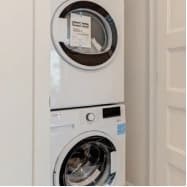
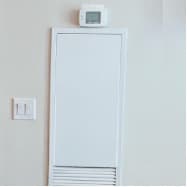
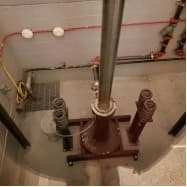
Eddy detects water through two layers running in parallel. Point-of-leak sensors sit where leaks happen: common areas and mechanical rooms (including elevator pits), inside suites at high-risk appliances, and behind walls at the risers that hide damage until cascade. Flow-based detection runs continuously at meters across the building, flagging continuous low flow, continuous use and extreme use against thresholds learned from your building's baseline.
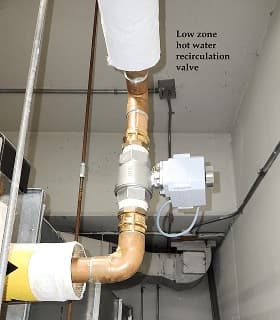
Detection without action is just an alert. Every sensor or meter event can trigger a valve, automatically on threshold or remotely from the dashboard. Eddy IQ is the all-in-one meter and valve for ¾"–1" lines. Eddy Link drives third-party shutoff valves up to 18" for everything larger.
Eddy's 24/7 monitoring center confirms every alert, escalates per your contact list and stays on the line until the water is off and the on-site team has eyes on it.
What happens during a leak
Detection alone is just an alert to a phone at 3:14 AM. The value is the chain of action that follows. Seven beats, every one documented and timestamped.
01
A point-of-leak sensor or a flow anomaly on the meter fires within seconds of the event starting.
02
The dashboard surfaces the correlated event. SMS, email and app notifications dispatch to the on-site team.
03
Per-zone, per-time-of-day rules decide whether to close the valve immediately or wait for human confirmation.
04
An Eddy operator pulls the building runbook, calls the on-call contact and stays on the line.
05
Automatic shutoff isolates at the main, the zone, the riser or the suite. Eddy IQ or Eddy Link drives it.
06
The property contact confirms the leak source and the water is off. The dashboard logs every action with a timestamp.
07
The event closes with a carrier-ready record: timeline, response chain, water saved and damage prevented.
The product layers
Five layers carry the program from sensor to shutoff to documented response. Every layer ships under one chain of accountability.
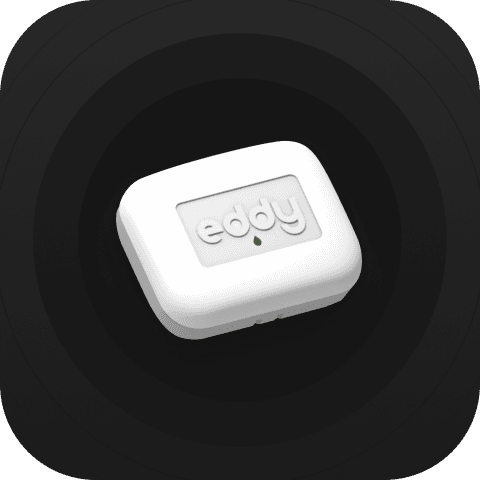
Eddy H2O
Detects water, temperature and humidity at high-risk points across the building.
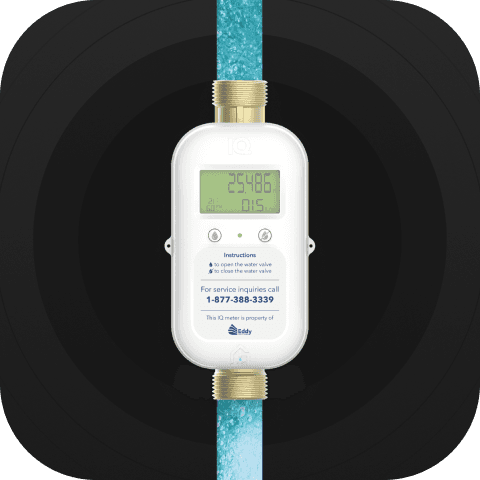
Eddy IQ
Monitors flow on smaller lines and combines meter and valve control in a single unit.
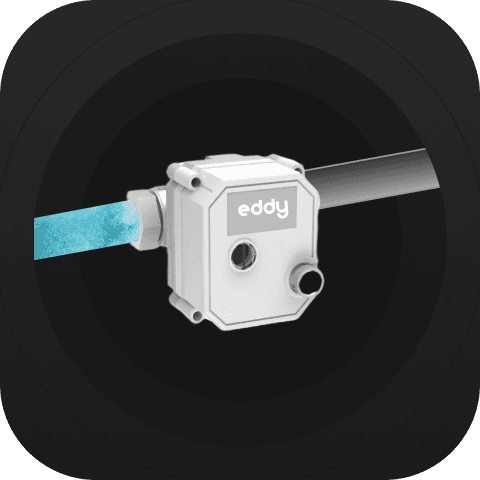
Eddy Valve
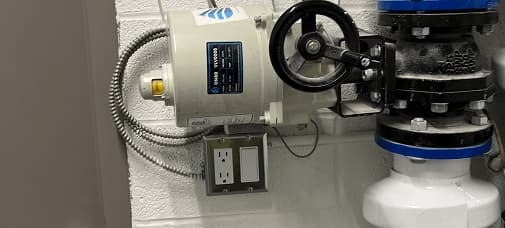
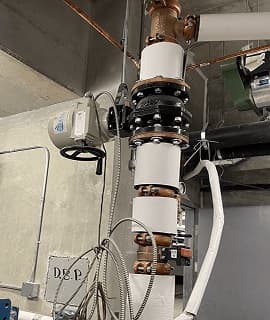
Motorized shutoff valve Eddy supplies or specs for larger lines, up to 18". Closes on threshold or on operator command.

Eddy Link
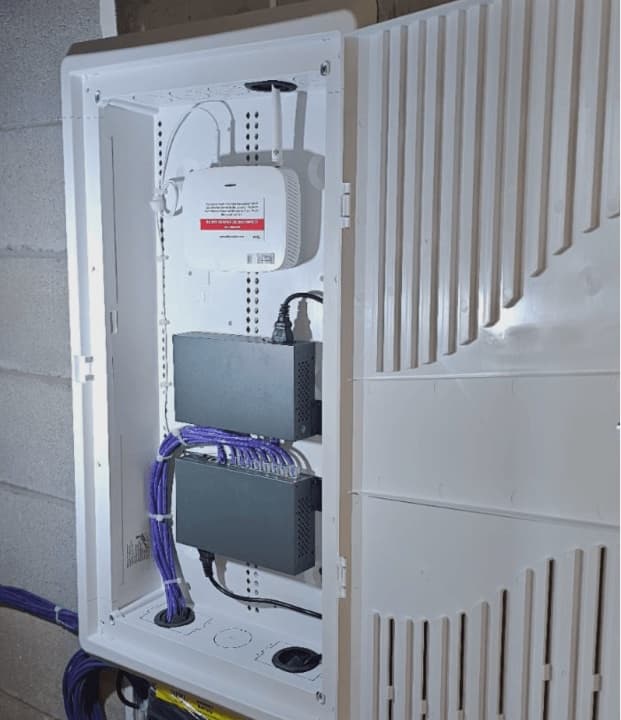
Reads meters and drives shutoff valves up to 18", on Eddy or third-party hardware. Works in new construction or retrofit.

Monitoring center
Trained operators confirm, escalate, support response and document every incident, 24/7.
Eddy in the field
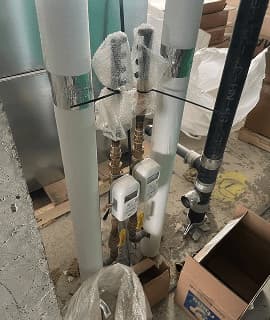
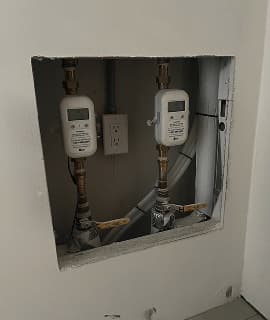
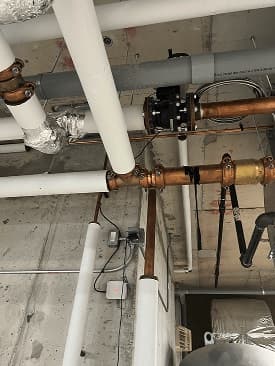
The diagrams above show how the system fits together. These are the same valves, meters and sensors on live building water infrastructure, installed by the Eddy field team.
The hardware, installed
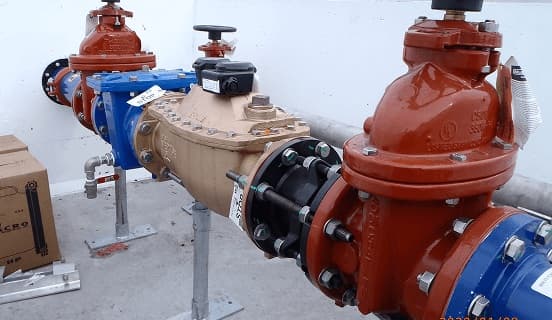
Where the leak sensors sit



Built for different building stages
Eddy goes in during construction, retrofits into an operating building or carries an entire portfolio. The hardware is the same. The deployment path adapts.
Stage 01
Installed during construction to protect the active site, support builder's risk strategy and transition cleanly into operations. Same hardware, same monitoring center.
Stage 02
Adds sensors, meters and shutoff control to a building already in operation. Eddy Link reads the meters and drives the valves the building already has, or new ones Eddy installs.
Stage 03
Supports property managers and owners with monitoring, escalation, reporting and long-term risk reduction across every building in the portfolio.
Real client deployments, real outcomes. Each story is the same program running against a different asset class.

Eddy deployed during construction at Luskin Conference Center, Weyburn Housing and the CHS Medical Facility, then continued through operations. Roof-drain monitoring at CHS helped UCLA defer a major roof replacement until funding was available.
Read case study
Forty-seven anomalies investigated and thirty-nine confirmed leaks contained on PCL's monitored network. Eddy is now budgeted from the proposal stage on every PCL project.
Read case study
FirstService Residential retrofitted Eddy across HVAC, risers, fixtures and common areas. Four leak events mitigated annually with $11K in estimated annual savings.
Read case study
Comprehensive retrofit across HVAC, risers, sinks, toilets and common areas. Fourteen events mitigated annually with $41K in estimated operational savings.
Read case study
Both Four Seasons Residences towers ran fifteen confirmed leak incidents through the Eddy monitoring program with two-to-seven minute response times. Zero major incidents, zero suite displacements.
Read case study
Tenant-aware shutoff sequences let a single riser go down without closing floors. Operations gets the alert before the tenant does.
Read case studyAt portfolio scale
Drawn from the State of Water Risk '26 report, audited every year against carrier loss runs.
Eddy monitors water across the whole building. The Eddy H2O sensor, a 3-in-1 device, sits in risk-prone spaces like kitchens, bathrooms and laundry, detecting the presence of water while tracking humidity and temperature. Smart meters track flow on the domestic main, on zone risers and on closed-loop heating and cooling systems. In-suite flow metering is available as an add-on.
Yes. The Eddy IQ is an all-in-one valve and meter for ¾" and 1" lines, with onboard machine learning that learns the building's water usage and flags irregular flow. For larger lines the Eddy Link drives third-party valves and meters that Eddy supplies. Shutoff fires on a sensor trigger, a flow anomaly or an operator command, and the level of automation depends on what the client has purchased and where valves and sensors are deployed.
Not necessarily. The Eddy Link connects to and reads third-party North American meters and valves, and Eddy supplies that hardware as part of the system. Where hardware is missing or past its service life, Eddy supplies and installs its own. Either way the building runs on one monitoring, response and reporting program.
Yes. The majority of the system is wireless, so sensors and network gateways install without cutting walls or running conduit. Inline products like valves, meters and IQ units require low-voltage cabling and a basic receptacle, and with thoughtful design they retrofit easily. Occupied buildings stay occupied during install.
Eddy's in-house monitoring center runs 24/7. The moment a water detection or flow alert triggers, everyone on the building's predefined call tree is automatically notified by text and email. Just as important, a live operator calls down the tree to confirm a real person is aware of the event and to support any water shutoff that's needed. Built-in automation handles the rest based on what the client has purchased and where hardware sits in the building.
Over-alerting is mitigated before it starts. Most nuisance alarms come from poorly placed sensors or meters set with ambiguous thresholds, so Eddy treats design and installation quality as the first line of defense. Downstream, a dedicated account rep monitors each system closely, often catches over-alerting before the client does and works with the site to dial it in and tweak as needed.
The client owns the data. Any data Eddy circulates more broadly is anonymized. The web-based dashboard, accessible from any device anywhere in the world, surfaces active alerts, live flow readings and notes on leak events. Account reps deliver monthly reports, run quarterly training sessions and produce annual reports formatted for insurance renewals, ESG filings and internal ops reviews. An API delivers the same data to any downstream system the client chooses.
Every device is built with power and communication redundancy. Wireless sensors need neither. Gateways get UPS battery backup and cellular modems to protect the core communication infrastructure. Links get UPS backup and are often installed on emergency building power. IQ units carry a mini-UPS, run for three days without power and keep their detection logic running onboard regardless of network connectivity.
Work directly with our specialists to map your building's risk points and create a solution that addresses your needs.
We use cookies to improve your experience and analyze traffic.